
Adopting a Rescue Cat: What to Expect
Cats are often perceived as self-sufficient and adaptable, but moving to a new home is one of the most stressful experiences a cat can face. Territory is central to feline psychological security, and when that territory is suddenly and completely changed, the resulting stress can be profound. Understanding this helps explain why a rescue cat that was described as affectionate and playful at the shelter may spend its first week hiding behind a wardrobe in complete silence. The behaviour is not a sign of a failed adoption or a broken cat — it is a perfectly normal response to an overwhelming situation. With the right approach, most rescue cats settle beautifully. Patience is the single most important quality an adopter can bring.
The 3-3-3 Rule for Rescue Cats
Originally developed in the context of dog rehoming, the 3-3-3 rule translates well to cats and provides a helpful framework for understanding what your rescue cat is experiencing at each stage of its adjustment.
The First 3 Days: Overwhelm and Withdrawal
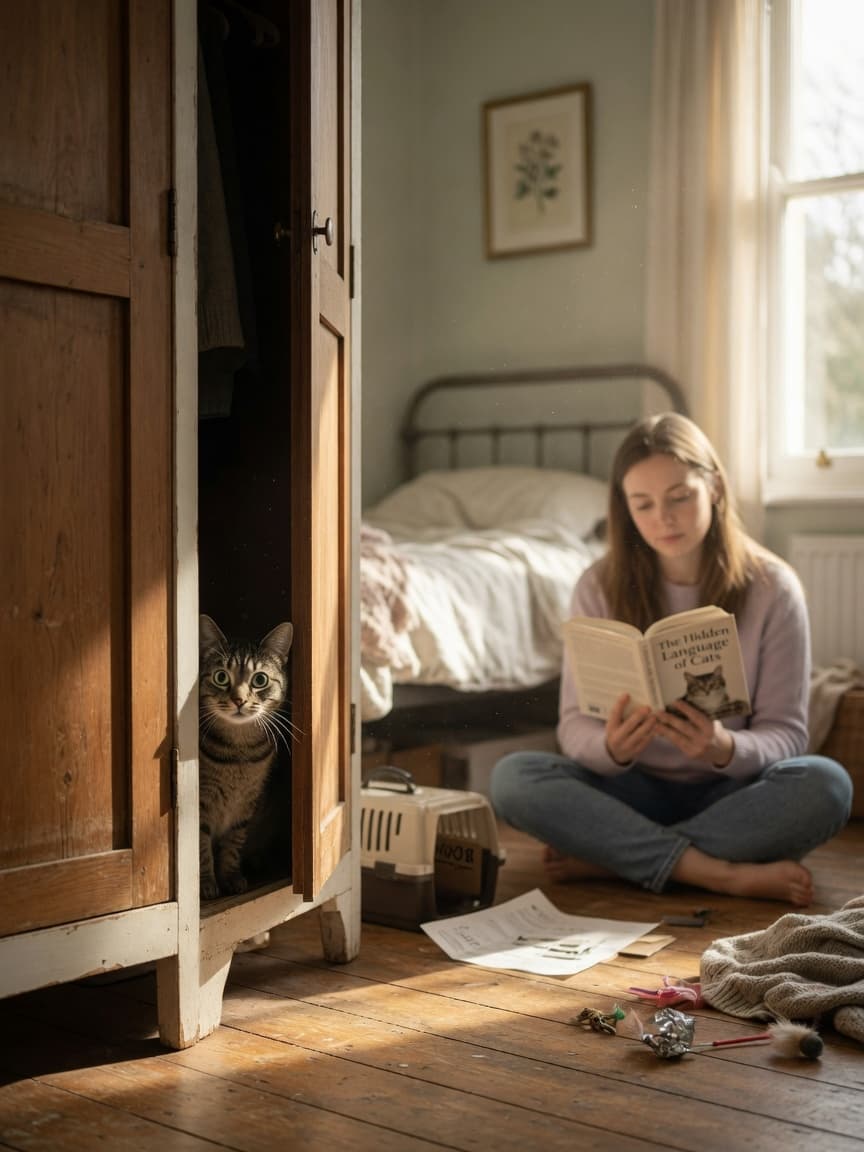
During the first three days in a new home, most rescue cats are in a state of acute stress. They have lost their familiar territory, familiar smells, and familiar routines. Common behaviours during this phase include hiding continuously, refusing food, not using the litter tray in a visible location, and showing no interest in interaction. Some cats will hiss or swipe if approached during this period, not out of aggression but out of fear. The best approach is to resist all temptation to seek interaction. Provide food, water, and a litter tray, speak quietly as you pass, and leave the cat to process its new surroundings at its own pace. Checking on the cat by sitting quietly in the same room — reading, working on a laptop — is far more effective than attempting to stroke or pick up a frightened animal.
The First 3 Weeks: Beginning to Explore
Around the second or third week, most cats begin to venture out of hiding, particularly at quiet times such as early morning or late evening. They may start to eat more freely, use the litter tray confidently, and begin exploring the space available to them. This is also when they start to register you as a consistent, non-threatening presence. Do not rush this phase. Allow the cat to approach you on its terms. Offering a treat, a toy on a wand, or simply a finger to sniff at close range are all low-pressure ways to begin building the relationship. Avoid direct eye contact, which cats often interpret as a threat, and instead slow-blink and look slightly away to communicate calm and friendly intent.
The First 3 Months: Feeling at Home
By three months, most rescue cats have settled into their new home and begun to show their true personality. The cat that spent its first week invisible may now be demanding attention at every opportunity. Bonds formed during this period tend to be remarkably deep, particularly with cats that have experienced difficult previous circumstances. Continue to provide routine, enrichment, and consistent positive interaction throughout this period as the cat finalises its sense of security in its new territory.
The Safe Room Approach
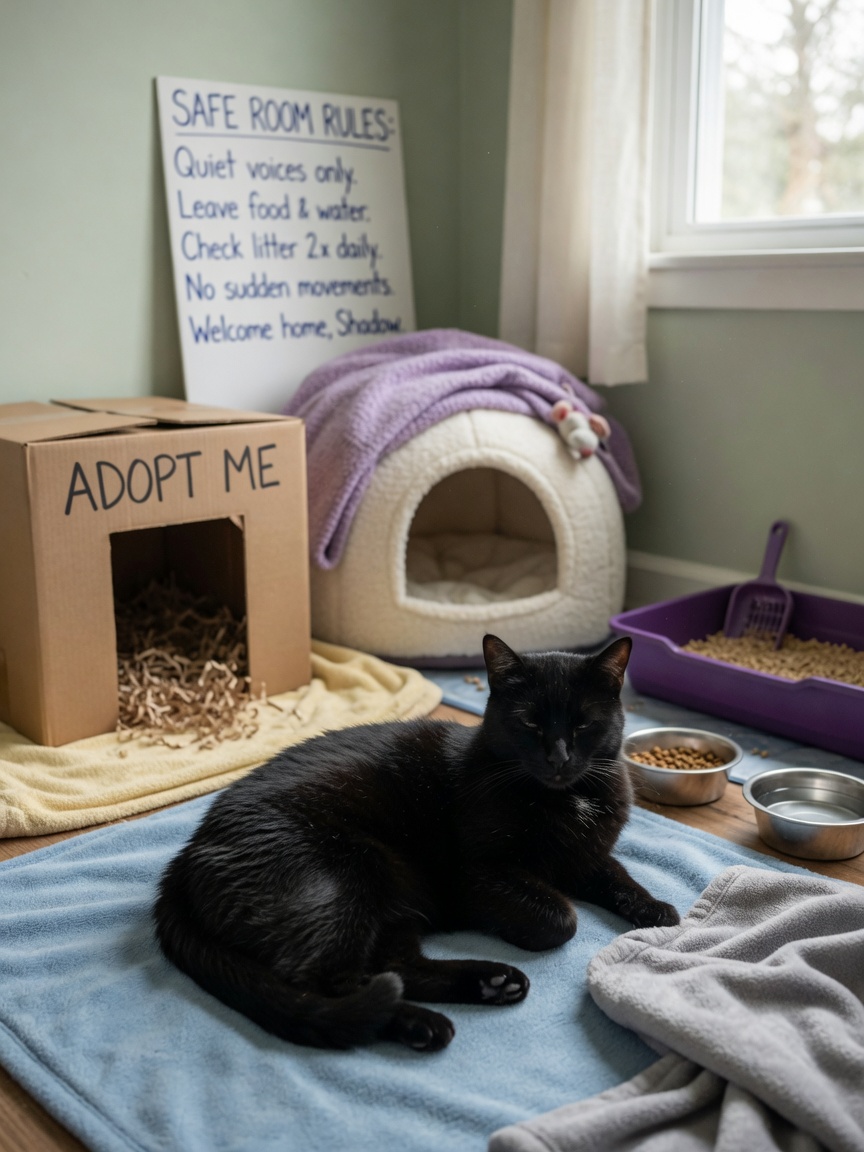
One of the most effective tools for helping a rescue cat settle is the safe room method. Rather than giving the cat immediate access to the whole house — which can feel as overwhelming as being released into an unknown landscape — begin by confining the cat to a single room. This room should contain everything the cat needs: a litter tray, food and water, a cosy sleeping area or igloo bed, a scratching post, and a hiding spot such as a cardboard box on its side. The room should be quiet, free from heavy foot traffic, and accessible to the cat only. After several days, once the cat is eating normally and moving around the room comfortably, you can begin to expand its territory gradually by opening access to adjacent rooms one at a time.
Hiding Behaviour: Why You Should Not Force Interaction
One of the most common mistakes new cat adopters make is attempting to retrieve a hiding cat in order to reassure it. This approach invariably backfires. When a cat chooses to hide, it is using an instinctive coping strategy — withdrawal from a perceived threat. Being pulled from its hiding place removes this coping mechanism entirely and dramatically increases stress. Instead, ensure hiding spots are safe and accessible, and wait for the cat to emerge in its own time. If you are concerned about a cat that has not eaten or drunk for more than twenty-four hours, contact your vet or the rescue organisation for advice, but in most cases patience is the correct response.
Scent Swapping for Multi-Cat Households
If you already have a resident cat, introducing a rescue cat requires careful management to avoid conflict. Cats communicate primarily through scent, and a new cat arriving in the home represents a significant territorial intrusion to any resident feline. Scent swapping is a technique that allows both cats to become familiar with each other's smell before any face-to-face encounter takes place. Begin by stroking one cat and then the other without washing your hands, so each cat absorbs the other's scent from your clothing. Progress to swapping bedding between the two cats' resting areas. Next, allow each cat to explore the other's space while the other cat is absent. Finally, introduce visual contact through a mesh barrier or slightly open door before any direct meeting. This gradual process can take two to four weeks but significantly reduces the risk of aggressive encounters.
Feliway Classic Diffuser as a Calming Aid
Feliway Classic is a synthetic analogue of the feline facial pheromone — the scent cats deposit when they rub their cheeks against objects in their environment to mark territory as safe. Plugging a Feliway Classic diffuser into the safe room before the cat arrives can help reduce stress during the initial adjustment period. The diffuser should be placed at cat height, away from draughts and direct sunlight, and left running continuously. It is not a sedative and will not change the cat's behaviour dramatically, but clinical studies have shown it reduces stress-related behaviours including hiding, house soiling, and reduced appetite in cats in unfamiliar environments. It is available from veterinary practices, pet shops, and online retailers across the UK.
UK Rescue Organisations
Cats Protection
Cats Protection is the UK's leading cat welfare charity, with a network of over two hundred and fifty volunteer-run branches and around thirty-seven rehoming and adoption centres nationwide. They rehome tens of thousands of cats each year and offer pre- and post-adoption support. Their website allows you to search for cats available near your postcode and filter by characteristics such as suitability for children, other pets, and indoor living.
RSPCA
The RSPCA's animal centres across England and Wales rehome cats of all ages and backgrounds, including cats recovered from welfare investigations. The adoption process includes a consultation to ensure a good match between the cat's needs and the adopter's circumstances.
Local Independent Shelters
Beyond the national organisations, the UK has a significant network of independent local cat rescues and foster-based organisations. These smaller rescues often have a more detailed knowledge of each individual cat's personality, history, and specific needs, as many animals are fostered in home environments rather than kept in kennel-style settings. Searching for cat rescue in your town or county alongside checking the organisations listed on the Rescue Remedies or Feline Friends directories can help you find local options.
The Reward of Patience
Rescuing a cat is not always the immediate, warm experience of films and social media. There may be weeks of a cat you cannot see, cannot touch, and cannot comfort. But the moment a rescue cat first approaches you of its own accord — bumping its head against your hand, settling into your lap, or simply choosing to sleep in the same room as you — carries a quality that is entirely its own. These cats have chosen you, and that choice, made freely on their own terms, is the foundation of a bond that can last a lifetime.