
What Is Veterinary Acupuncture?
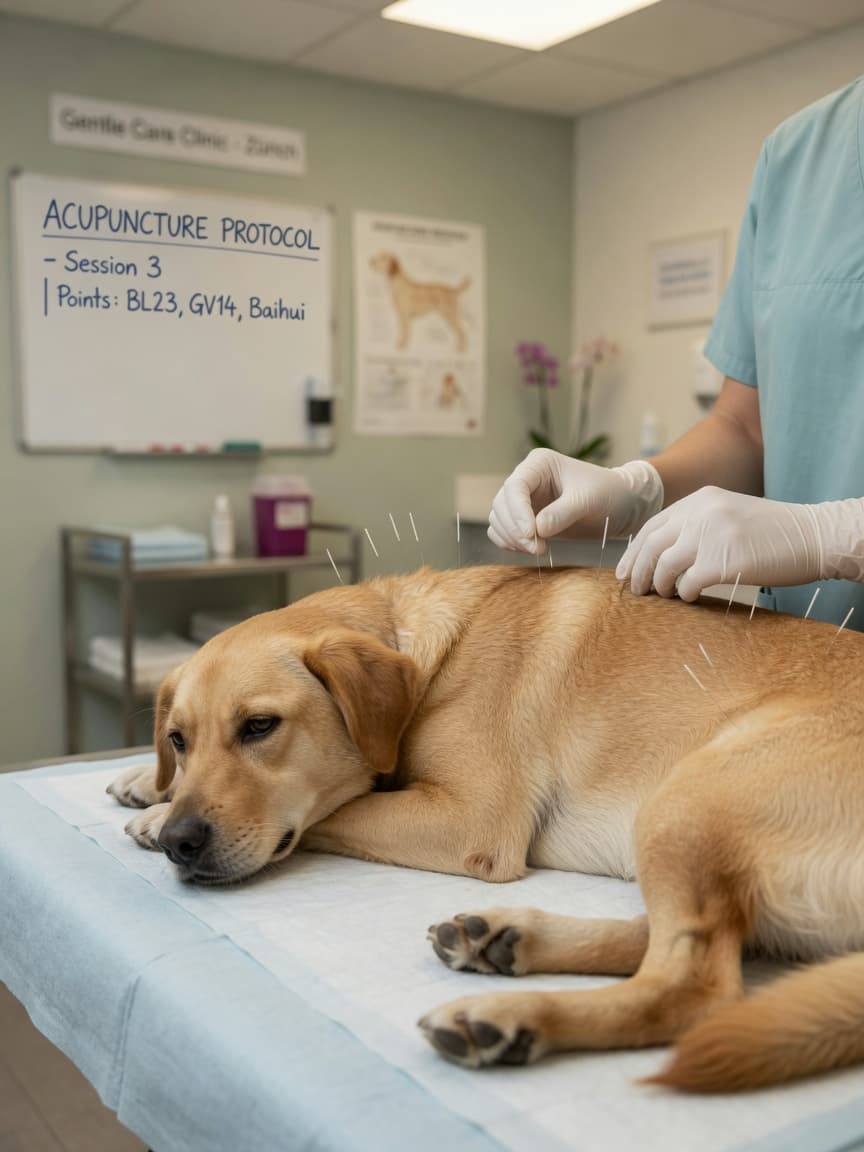
Veterinary acupuncture involves the insertion of fine sterile needles into specific anatomical points on an animal's body with the aim of producing a therapeutic effect. Originating in traditional Chinese medicine, acupuncture has been adapted for use in animals and is now practised by trained veterinary surgeons across the UK and internationally as a complementary modality — used alongside, rather than instead of, conventional treatment.
The Legal Requirement: Vets Only
In the UK, veterinary acupuncture may only be performed by a registered veterinary surgeon, or by a veterinary nurse or other practitioner working under the direct supervision of a vet. This requirement exists under the Veterinary Surgeons Act 1966. Unlike in some countries where acupuncturists can treat animals without veterinary involvement, the UK legal framework is clear: any needling of an animal is an act of veterinary surgery and requires veterinary authorisation. If you encounter anyone offering acupuncture for pets who is not a registered vet or working under direct vet supervision, this represents a legal and safety concern.
Qualifications: Chi Institute and IVAS
Veterinary surgeons who wish to practise acupuncture complete postgraduate training through recognised bodies. Two of the most widely respected are:
- The Chi Institute, which offers the Chi Institute Certified Veterinary Acupuncturist (CVA) programme — a structured course covering traditional Chinese veterinary medicine (TCVM), acupuncture point location, needling technique, and integrative case management.
- The International Veterinary Acupuncture Society (IVAS), which provides the IVAS Certified Veterinary Acupuncturist certification. The IVAS programme is evidence-focused and internationally recognised, with an examination component assessing both theoretical knowledge and practical competence.
When seeking veterinary acupuncture for your pet, asking about the vet's specific training and whether they hold one of these certifications is entirely appropriate.
How Acupuncture Works: The Physiological Mechanisms
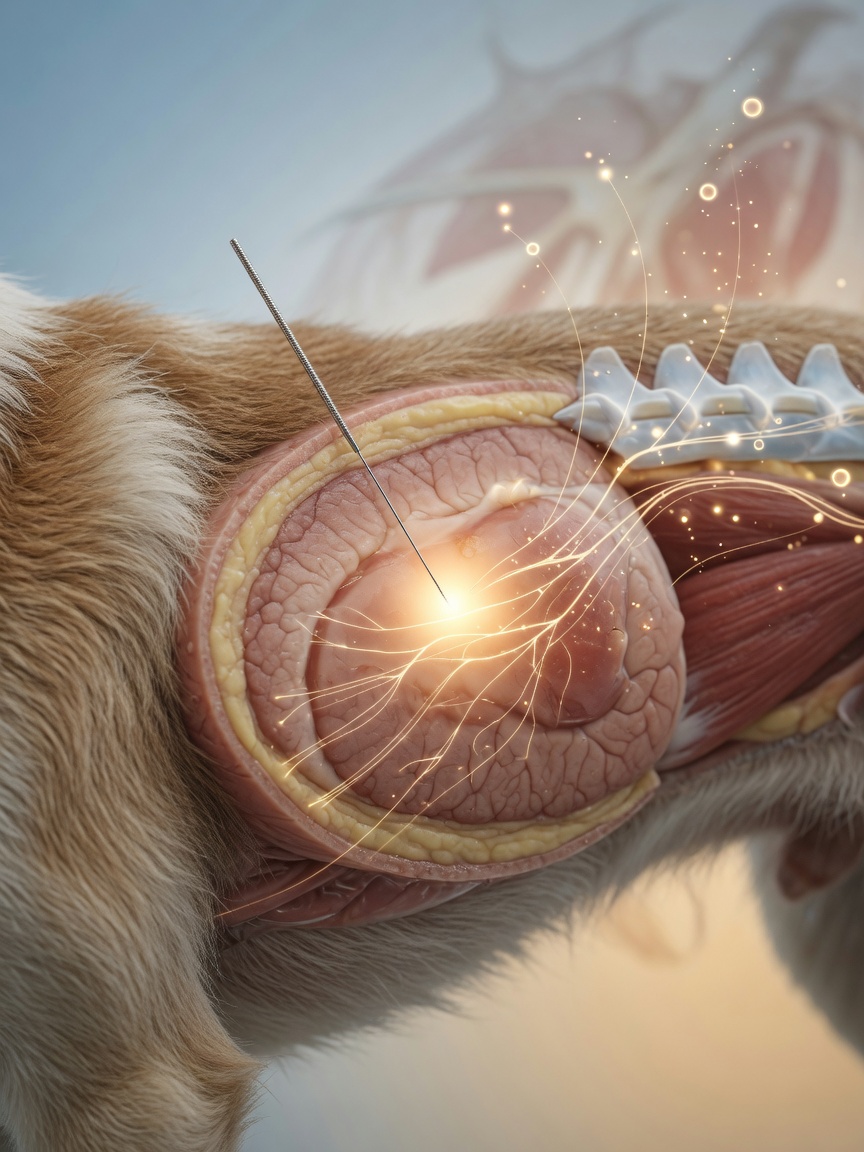
Traditional Chinese medicine explains acupuncture in terms of the flow of Qi (vital energy) along meridians. Whilst this framework is not accepted by Western biomedical science, the physiological effects of needling are increasingly well characterised through research. Several mechanisms are thought to underlie the clinical effects observed:
Endorphin Release
Needle insertion at acupuncture points stimulates local sensory nerve fibres. This stimulation is transmitted to the central nervous system and triggers the release of endogenous opioids — including endorphins, enkephalins, and dynorphins — which produce analgesia. This mechanism is considered one of the primary explanations for acupuncture's pain-relieving effects and has been demonstrated in animal models as well as human studies.
Segmental Analgesia
Segmental analgesia theory holds that stimulating certain points activates inhibitory pathways within specific spinal cord segments, reducing the transmission of pain signals from tissues innervated by those segments. This explains why needling at a point remote from the site of pain can still produce local pain relief — the needle and the painful area share the same spinal cord segment.
Anti-Inflammatory Pathways
Research has demonstrated that acupuncture can modulate inflammatory mediators including cytokines and prostaglandins. Local needling triggers a localised anti-inflammatory response, whilst certain points appear to activate systemic anti-inflammatory pathways via the autonomic nervous system. This anti-inflammatory effect is thought to contribute to the benefits observed in arthritis and other inflammatory conditions.
The Evidence Base: Where It Is Strongest
The evidence for veterinary acupuncture is not uniform across all conditions. A realistic appraisal of the literature reveals areas of genuine promise alongside significant gaps:
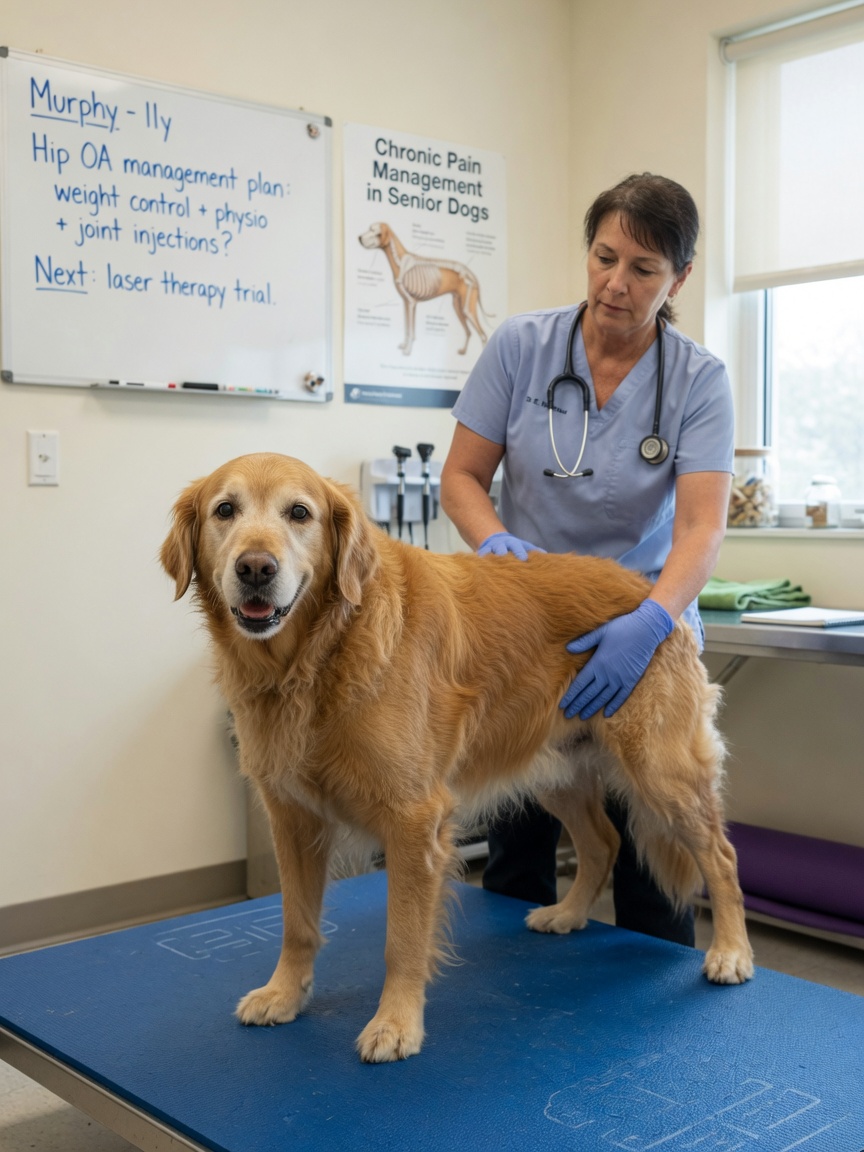
- Musculoskeletal pain: The strongest evidence supports acupuncture for the management of chronic musculoskeletal pain, particularly osteoarthritis. Multiple studies in dogs have demonstrated reductions in pain scores and improvements in mobility. This is the most evidence-based application of veterinary acupuncture.
- Neurological rehabilitation: There is reasonable evidence supporting acupuncture as an adjunct in the rehabilitation of dogs with intervertebral disc disease (IVDD) and other spinal conditions. Some studies suggest faster return of neurological function in acupuncture-treated dogs compared to controls, though study quality is variable.
- Other conditions: Claims for acupuncture benefits in a wide range of other conditions — including gastrointestinal disorders, respiratory conditions, and reproductive problems — have much weaker or absent evidence in veterinary patients. Owners should be cautious about practitioners making broad or unsupported claims.
What to Expect in a Session
An initial veterinary acupuncture consultation involves a full clinical assessment and a review of the animal's history and current treatments. The vet will discuss the proposed treatment plan, including the number of sessions anticipated and the expected trajectory of improvement.
During a session, fine gauge stainless steel needles are inserted at selected points. Needle placement is generally quick, and most animals tolerate it well with minimal reaction. The needles are typically left in place for 10–20 minutes. Some practitioners use electroacupuncture, in which a small electrical current is applied to the needles to enhance stimulation.
Most acupuncture protocols involve an initial course of four to six weekly sessions, followed by reassessment. If a positive response is observed, ongoing maintenance sessions — monthly or as needed — may be recommended.
Dogs vs Cats as Acupuncture Patients
Dogs and cats differ considerably as acupuncture patients. Most dogs accept needling readily and often become visibly relaxed during sessions — some fall asleep. The calm, focused environment of a typical acupuncture appointment suits many dogs well.
Cats are a more variable proposition. Some cats tolerate acupuncture very well, particularly when they are pain-motivated — a cat in chronic discomfort who finds relief through treatment often becomes a cooperative patient. Others find needling stressful regardless of technique. Experienced veterinary acupuncturists who work frequently with cats develop approaches to minimise stress, including minimising handling, using the fewest needles necessary, and keeping sessions brief. Owners should discuss their cat's temperament with the vet before beginning treatment.
Acupuncture Within an Integrative Plan
Veterinary acupuncture is best understood as one component of a broader treatment plan rather than a standalone cure. For a dog with arthritis, for example, acupuncture may complement weight management, appropriate exercise, physiotherapy, joint supplementation, and where necessary pharmaceutical analgesia. When offered in this integrative context by a qualified vet, acupuncture provides a valuable additional tool for managing pain and supporting quality of life.
Written by Sarah Bennett