
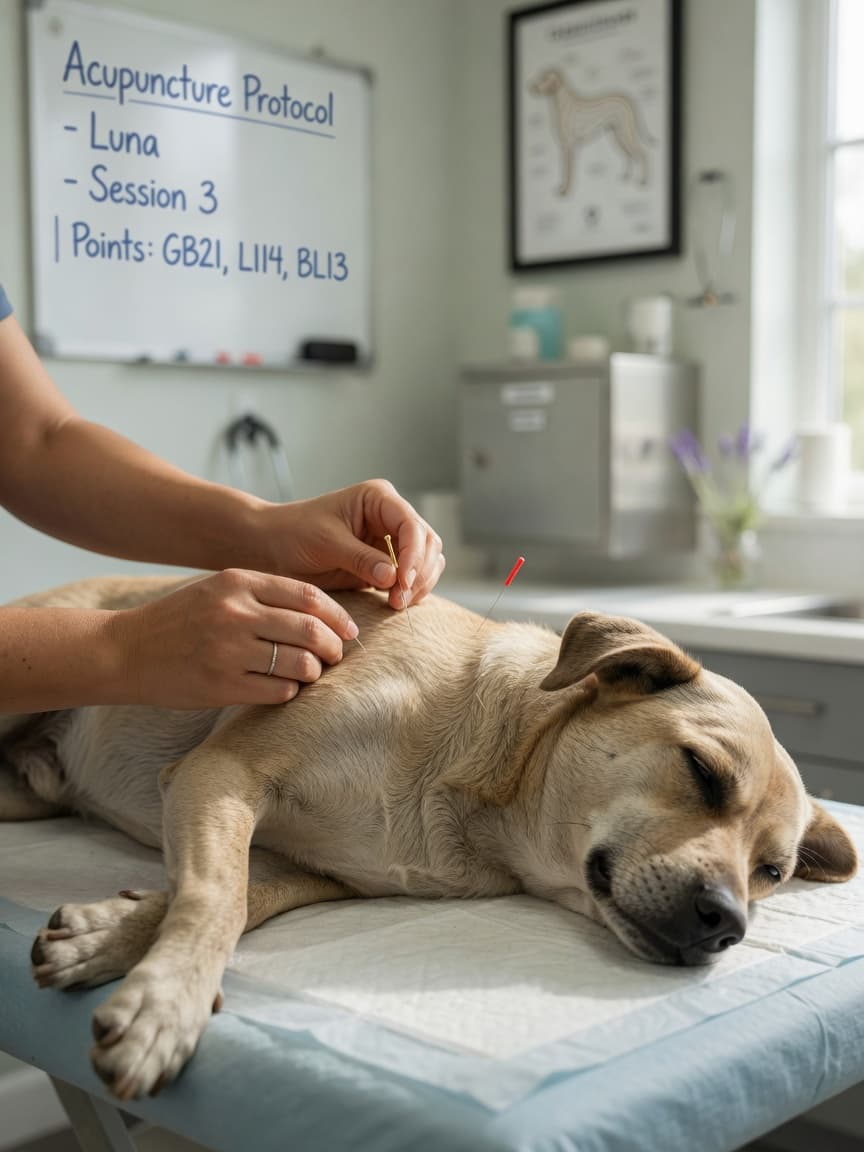
Does Sticking Needles Into Your Pet Actually Do Anything?
Around 30% of dogs in the UK will experience chronic pain at some point in their lives, and cat owners are increasingly seeking options beyond long-term pharmaceutical use. Acupuncture — inserting fine needles into specific anatomical points — has moved from the fringes of veterinary medicine into mainstream specialist practices. But the question most owners rightly ask is: does it actually work, or is it sophisticated placebo?
The Biological Basis: Not Just Ancient Mysticism
Modern veterinary acupuncture is largely divorced from traditional Chinese medicine philosophy. What practitioners and researchers focus on instead are measurable physiological effects. Needle insertion at specific points stimulates sensory nerves, triggers the release of endorphins and serotonin, and appears to modulate pain signalling via the gate control pathway.
Research published in the American Journal of Traditional Chinese Veterinary Medicine has documented localised increases in blood flow, changes in cortisol levels, and altered nerve conduction following acupuncture treatment in dogs. These are real, measurable biological responses — not imagined ones.
What the Evidence Says: Honest Assessment
The evidence base for veterinary acupuncture is growing but still maturing. Here is where it is strongest and where gaps remain.
Strongest Evidence
- Musculoskeletal pain, particularly osteoarthritis in dogs — multiple controlled studies show meaningful reductions in pain scores and improved mobility
- Chronic pain management as an adjunct to conventional treatment
- Post-surgical pain reduction, with some studies showing reduced anaesthetic requirements
- Cervical and lumbar intervertebral disc disease — several veterinary neurology centres now offer it as part of rehabilitation protocols
Promising but Limited Evidence
- Epilepsy — some small studies suggest reduced seizure frequency, but sample sizes are too small to draw firm conclusions
- Gastrointestinal motility disorders
- Anxiety and behavioural conditions in cats
Where Evidence Is Weak
- Immune system enhancement claims lack rigorous support
- Fertility and reproductive applications remain largely anecdotal
- Cancer treatment — acupuncture may help manage side effects of chemotherapy, but claims of direct anti-tumour effects are not supported
What Happens in a Veterinary Acupuncture Session
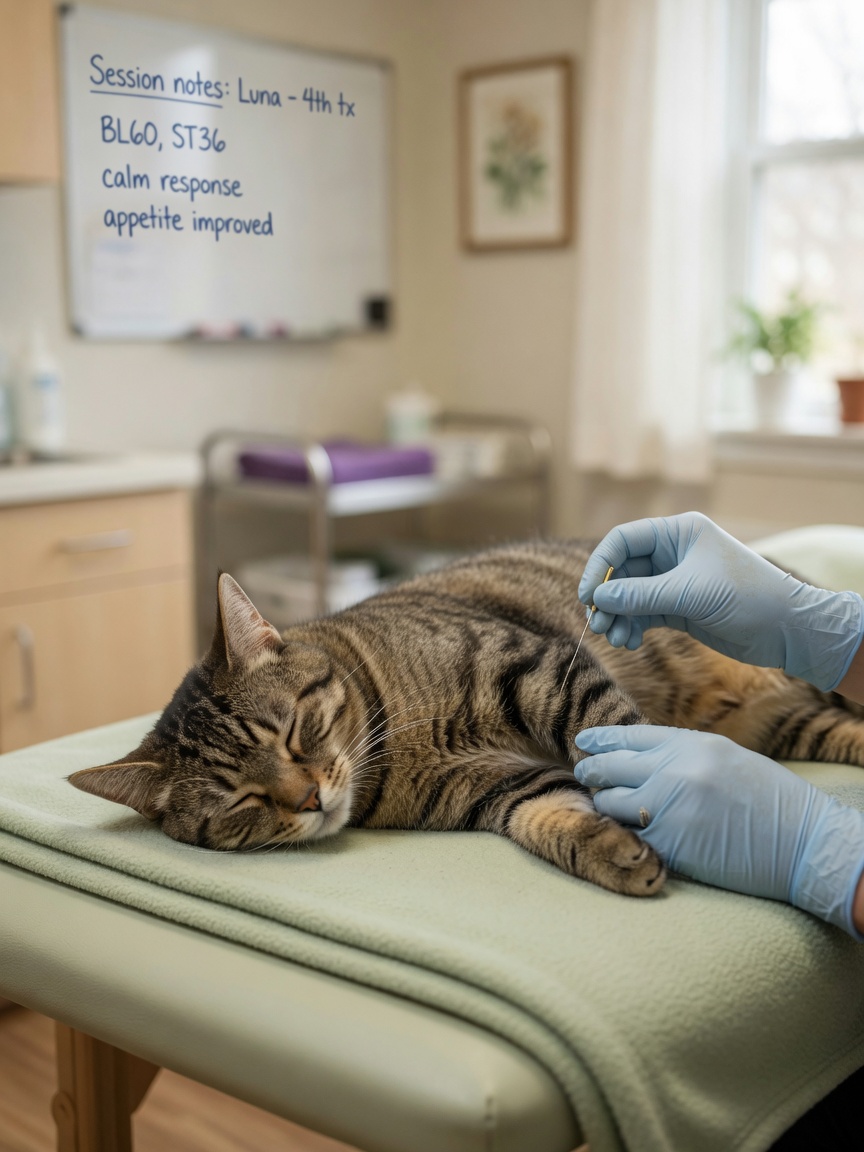
A qualified veterinary acupuncturist — who must hold a primary veterinary degree plus specialist acupuncture training — begins with a full clinical assessment. Treatment is not one-size-fits-all. Point selection depends on diagnosis, species, temperament, and treatment goals.
Sessions typically last 20 to 40 minutes. Most animals tolerate needles well, often becoming noticeably relaxed or even sleepy during treatment. Cats tend to require fewer needles and shorter sessions than dogs. A typical course involves four to six weekly sessions, with maintenance treatments monthly if a good response is achieved.
Safety and Side Effects
When performed by a trained veterinary professional, acupuncture has an excellent safety profile. Mild, temporary soreness or fatigue in the 24 hours following treatment is not uncommon and is generally considered a sign of biological response rather than harm.
Contraindications exist and matter. Acupuncture should be avoided over tumours, in animals with bleeding disorders, and during pregnancy in certain point locations. This is precisely why it must only be performed by a qualified vet, not a lay practitioner of any kind.
How to Find a Qualified Veterinary Acupuncturist
In the UK, look for members of the Association of British Veterinary Acupuncturists (ABVA). Internationally, the Chi Institute and the International Veterinary Acupuncture Society (IVAS) certify practitioners. Any practitioner should hold a full veterinary licence alongside their acupuncture qualification.
Always discuss acupuncture with your primary vet before starting treatment. It works best as part of a multimodal plan rather than a replacement for conventional diagnosis and care. Your vet can advise whether your animal is a good candidate and help coordinate care between practitioners.
Is It Worth Trying?
For dogs with chronic osteoarthritis or intervertebral disc disease, the evidence is strong enough to consider acupuncture as a genuine adjunct therapy rather than a last resort. For cats and for less-studied conditions, it remains a reasonable option when conventional approaches have plateaued and the practitioner is properly qualified.
The key is realistic expectations. Acupuncture rarely produces dramatic overnight transformation. It is, at its best, a tool for improving quality of life incrementally — reducing pain enough to allow better sleep, more movement, and greater engagement with daily life. For many animals, that is worth a great deal.