
Arthritis-Zeichen bei Hunden & natürliche Unterstützungsoptionen für Gelenke
Von Julia Wrenfield, Fachautorin für Haustiergesundheit — 25. Juni 2026
- Prävalenz: Etwa 20 % der erwachsenen Hunde; steigt auf über 65 % bei Hunden ab 7 Jahren
- Am meisten betroffene Rassen: Labrador Retriever, Deutsche Schäferhunde, Golden Retriever, Rottweiler, große und Riessenrassen im Allgemeinen
- Wichtigste frühe Anzeichen: Morgensteifheit, Widerwille zu springen, subtile Gangveränderungen
- Wichtig: Konsultieren Sie immer Ihren Tierarzt, bevor Sie ein Gelenkzusatzmittel oder CBD-Protokoll beginnen
Arthritis — genauer gesagt Osteoarthritis (OA) — ist eine der häufigsten und am meisten unterdiagnostizierten Hundekrankheiten bei Begleithunden. Da Hunde instinktiv stoisch mit Schmerz umgehen und da die Krankheit allmählich fortschreitet, erkennen viele Besitzer die Zeichen nicht, bis die Erkrankung bereits erheblich fortgeschritten ist. Die gute Nachricht ist, dass eine frühe Erkennung, kombiniert mit der richtigen Kombination aus konventioneller Behandlung und evidenzgestützten natürlichen Interventionen, einen großen Unterschied für den Komfort und die Lebensqualität eines Hundes ausmachen kann.
Dieser Leitfaden behandelt, wie man die Warnsignale erkennt, wie die Diagnose aussieht, was die konventionelle Behandlung umfasst und welche natürlichen Unterstützungsoptionen die stärkste wissenschaftliche Grundlage haben.
Die Zeichen von Arthritis bei Hunden erkennen
Im Gegensatz zu Menschen können Hunde Ihnen nicht mitteilen, dass ihre Gelenke schmerzen. Stattdessen zeigen sie Verhaltens- und körperliche Veränderungen, die Besitzer oft als „einfach älter werden" abtun. Während Alter zwar ein Risikofaktor ist, ist Schmerz kein unvermeidlicher oder akzeptabler Teil des Alterns — und die frühe Erkennung dieser Zeichen ist wichtig.
Hinken und veränderter Gang
Das offensichtlichste Zeichen von Gelenkschmerz ist ein Hinken, besonders wenn es nach Ruhe ausgeprägter ist und sich durch sanfte Bewegung leicht verbessert. Sie können bemerken, dass Ihr Hund beim Aufstehen aus der Liegeposition eine Vordergliedmaße bevorzugt, oder ein subtiles Schwanken der Hüften beim Gehen. Bei Hunden mit beidseitiger Hüftarthritis beschreiben Besitzer manchmal einen „Hüpf"-Gang beim Laufen, bei dem der Hund beide Hintergliedmaßen zusammen benutzt, um zu vermeiden, die schmerzhaften Gelenke abwechselnd zu belasten.
Morgensteifheit
Hunde mit Arthritis sind häufig steif, wenn sie gerade aufwachen oder nach einer langen Ruhe. Sie können bemerken, dass Ihr Hund für die ersten Minuten nach dem Aufstehen langsam und unbeholfen läuft und sich dann allmählich lockert, während er die Gelenke durch Bewegung aufwärmt. Dieses „Aufwärm"-Muster ist ein Merkmal von entzündlicher Gelenkerkrankung.
Widerwille, Treppen zu steigen oder zu springen
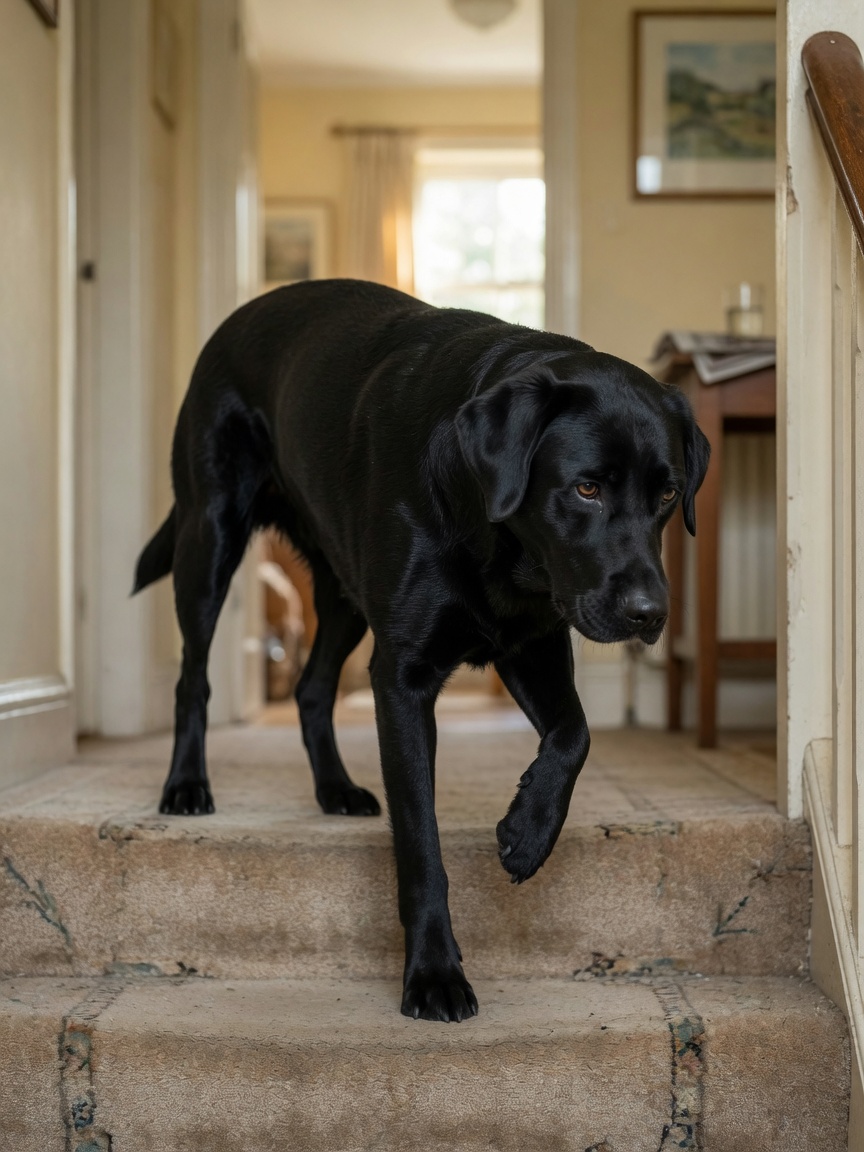
Wenn Ihr Hund früher ohne Zögern auf die Couch gesprungen ist und jetzt zögert, unsicher umherläuft oder ganz ablehnt, ist dies ein bedeutungsvolles Warnsignal. Treppen werden ähnlich anspruchsvoll, besonders beim Abstieg. Hunde mit Ellbogen- oder Schulterarthritis können Schwierigkeiten haben, ihren Kopf zu einer Schüssel auf dem Boden zu senken, was Besitzer daran bemerken können, dass sie weniger begeistert essen.
Verhaltensänderungen
Chronischer Schmerz verändert die Persönlichkeit. Ein Hund, der früher tolerant bei körperlichem Kontakt war, kann schnippisch werden, wenn er um betroffene Gelenke berührt wird. Sie könnten weniger Verspieltheit, Rückzug aus Familieninteraktionen, Änderungen im Schlafmuster (Schmerz wird oft nachts schlimmer) oder erhöhte Reizbarkeit bemerken. Einige Hunde werden ungewöhnlich anhänglich und suchen Trost; andere werden zurückgezogener.
Lecken oder Kauen an Gelenken
Hunde lecken oder kauen oft an einem Gelenk, das schmerzhaft oder entzündet ist. Im Laufe der Zeit kann dies zu lokalem Haarausfall oder Hautreizung über dem betroffenen Bereich führen, besonders über dem Carpus (Handgelenk), Ellbogen oder Sprunggelenk.
Muskelatrophie
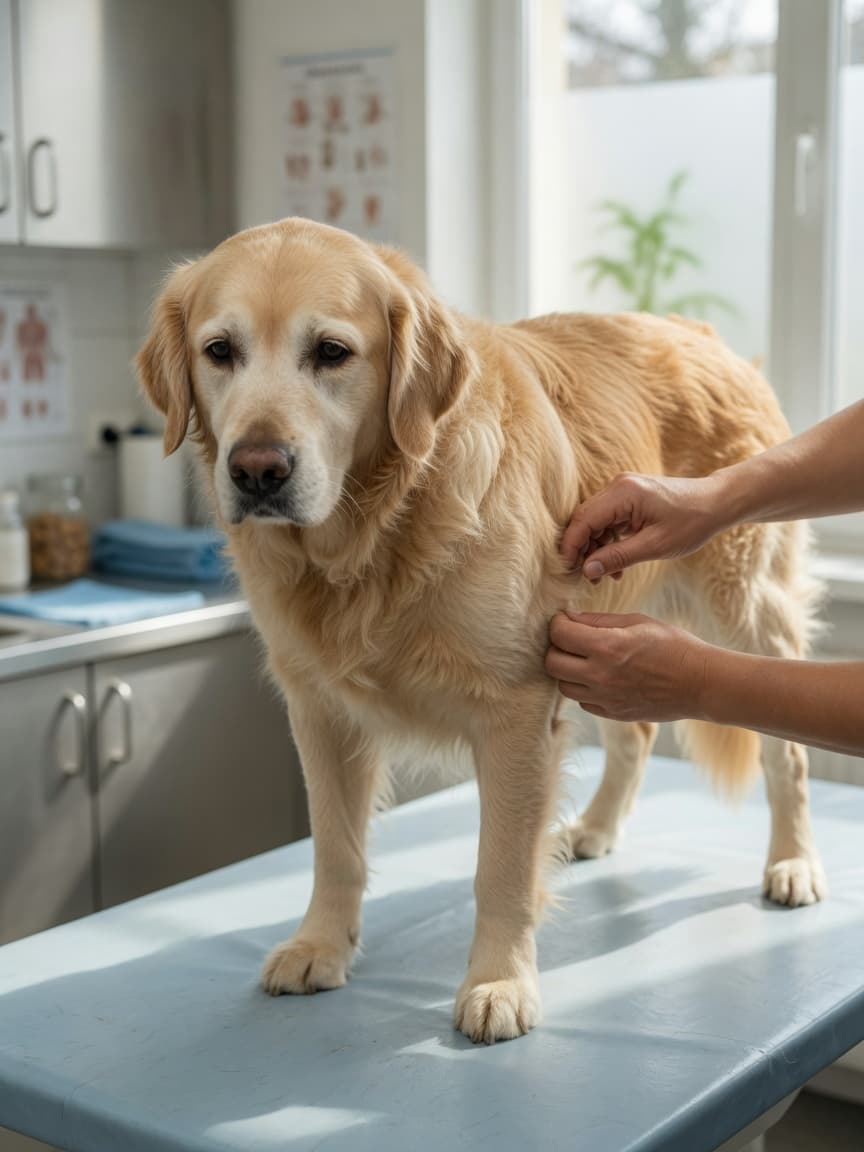
Da Hunde mit Gelenkschmerz das Gewicht von schmerzhaften Gliedmaßen abnehmen, schwächen die Muskeln der betroffenen Gliedmaße ab und schrumpfen durch Nichtgebrauch. Sie können bemerken, dass der eine Oberschenkel oder die eine Schulter deutlich kleiner ist als der andere. Dieser Muskelschwund wird am besten bemerkt, wenn Sie Ihre Hände symmetrisch entlang beider Hintergliedmaßen führen.
Diagnose: Was Sie beim Tierarzt erwartet
Wenn Sie eines der obigen Zeichen bemerken, ist eine tierärztliche Untersuchung der wesentliche erste Schritt. Ihr Tierarzt führt eine orthopädische Bewertung durch und tastet jedes Gelenk auf Schwellungen, Krepitus (Knirrschen), Schmerz bei Beugung oder Streckung und Bewegungseinschränkungen ab. Röntgenaufnahmen (Radiogramme) sind das Standard-Diagnose-Bildgebungsverfahren: Sie können Gelenkspaltverengung, Osteophyten (Knochensporne) und subchondrale Knochenveränderungen zeigen, die charakteristisch für OA sind.
In einigen Fällen können fortgeschrittene Bildgebungsverfahren wie CT oder MRT empfohlen werden, besonders bei komplexer Wirbelsäulen- oder Hüftpathologie. Blutuntersuchungen helfen, zugrunde liegende metabolische Ursachen der Gelenkentzündung auszuschließen und einen Ausgangswert vor Beginn langfristiger entzündungshemmender Medikation zu etablieren.
Konventionelle Behandlungsoptionen
Das Management von Hundearithritis durch einen Tierarzt ist multimodal, was bedeutet, dass es mehrere Ansätze kombiniert, um eine größere Wirkung zu erzielen als jede einzelne Behandlung allein:
| Behandlung | Wie es hilft | Anmerkungen |
|---|---|---|
| NSAIDs (z. B. Carprofen, Meloxicam) | Reduziert Schmerz und Entzündung; verbessert Beweglichkeit | Goldstandard der medikamentösen Behandlung; erfordert regelmäßige Leberfunktion und Nierenkontrolle |
| Gabapentin | Neuropathischer Schmerzlinderung; beruhigende Wirkung | Oft mit NSAIDs kombiniert; kann Schläfrigkeit verursachen |
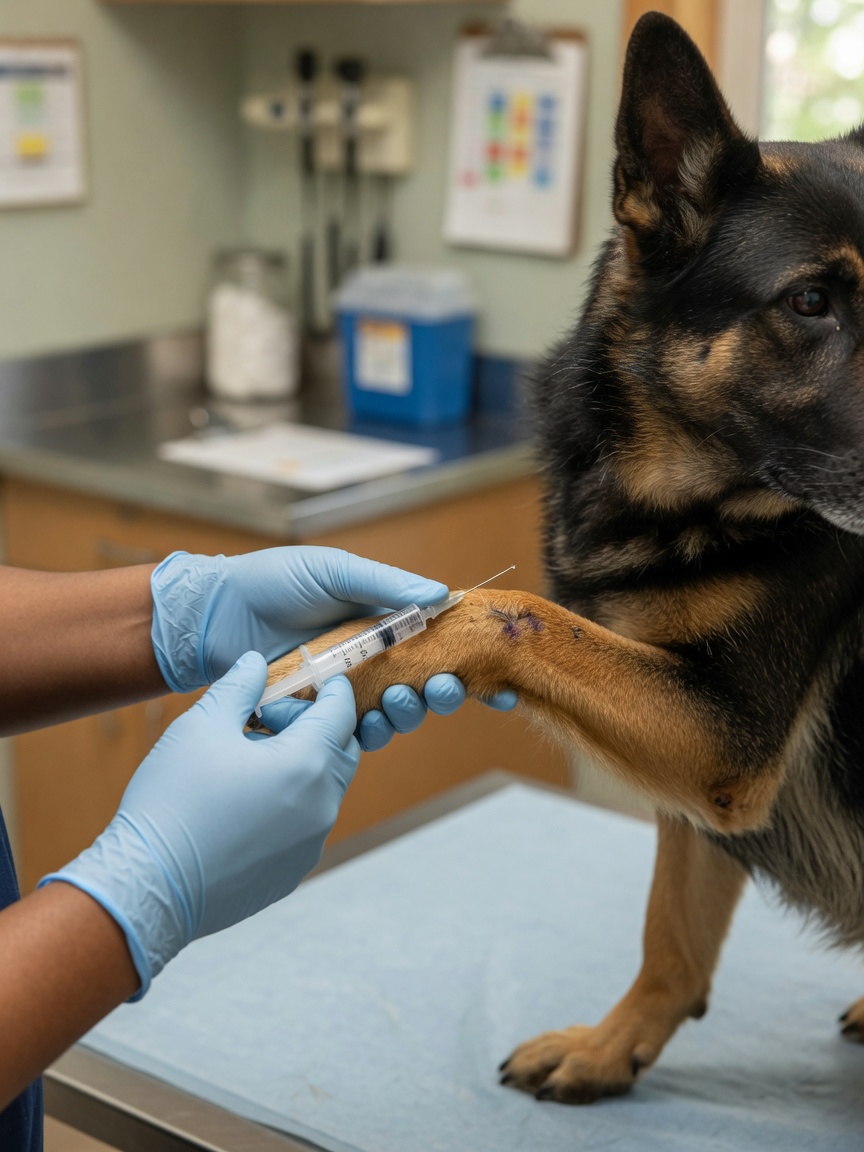
| Intraartikuläre Injektionen (Hyaluronsäure, Corticosteroide) | Direkte Gelenkbehandlung; reduziert lokale Entzündung | Mehrere Sitzungen möglich; wird unter Sedation verabreicht |
| Gewichtsverwaltung | Reduziert Belastung der Gelenke; verbessert Mobilität | Ein kritischer nichtmedikamentöser Ansatz; übergewichtige Hunde erleben oft deutliche Verbesserungen |
| Bewegung und Physiotherapie | Erhält Gelenkstabilität und Muskelmasse; verbessert Durchblutung | Sanfte, regelmäßige Bewegung ist besser als intensive Belastung; Schwimmen ist ideal |
Natürliche Unterstützungsoptionen mit Evidenzgrundlage
Während konventionelle Medikation der Grundpfeiler des Managements bleibt, haben mehrere natürliche Substanzen solide Forschungsergebnisse hinter sich. Wichtig: Diese sollten Ihren Tierarzt nicht ersetzen, sondern ergänzen.
Glucosamin und Chondroitinsulfat
Dies sind die am meisten untersuchten natürlichen Gelenksupplemente. Glucosamin ist ein Aminozucker, der ein Strukturkomponent des Knorpels ist; Chondroitinsulfat ist ein Glykosaminoglykan, das dem Knorpel Viskoelastizität verleiht.
Beweis: Eine 2006 Studie in Veterinary Therapeutics zeigte, dass Glucosamin und Chondroitin die Progression der Arthritis bei Hunden mit diagnostizierter Osteoarthritis verlangsamten. Ein systematischer Review empfahl tägliche Dosierung von mindestens 20 mg/kg Glucosamin und 15 mg/kg Chondroitin.
Anwendliche Leitlinien: Suchen Sie nach Produkten, die in einer Tierpharmazie zertifiziert sind. ForPetsHealthcare und Zooplus führen geprüfte Versionen. Ergebnisse treten typischerweise nach 4-6 Wochen auf.
Omega-3-Fettsäuren
Fischöl und andere Omega-3-Quellen haben gut dokumentierte entzündungshemmende Eigenschaften.
Beweis: Eine Studie von 2013 in The American Journal of Veterinary Research fand heraus, dass Hunde, die mit Fisch
Weiterlesen
Quellen & weiterführende Literatur
Dieser Artikel basiert auf begutachteter tiermedizinischer Forschung und seriösen Quellen. Entdecken Sie die Wissenschaft in unserer Forschungsbibliothek.
Related articles
Wie viel Bewegung braucht ein Hund? Welpen, ausgewachsene Hunde & Senioren
Hundegesundheit: Richtige Bewegung für Welpen, erwachsene Hunde & Senioren. Expertenrat zu Hundeerziehung und optimaler Fitness für Ihren Hund.
Read more →Ab wann gilt ein Hund als Senior? – Hundenalter und Altersgerechte Pflege
Seniorhunde erkennen: Symptome, Pflege & Tierarzt-Tipps für ältere Hunde. Hundekrankheiten im Alter verstehen.
Read more →Wie Sie Ihre ältere Katze aktiv und fit halten - Tipps für Seniorkatzen
Seniorkatzen aktiv halten: Tipps für Gesundheit, Fitness & mentale Stimulation im Alter
Read more →Wie Sie Ihrer älteren Katze helfen: Umfassender Leitfaden zur Katzenbetreuung im Alter
Seniorkatzen pflegen: Tipps für längeres, glücklicheres Leben Ihrer älteren Katze. Häufige Katzenkrankheiten erkennen & vorbeugen.
Read more →Ab wann ist eine Katze eine Seniorkatze? Das erwartet Sie wenn Ihre Katze älter wird
Alte Katzen: Altersgerechte Pflege, Ernährung & Gesundheitstipps für Senior-Katzen
Read more →Wie Sie Ihre Senior Katze gesund halten - Tierärztliche Tipps für ältere Katzen
Seniorkatzen ab 10 Jahren: Tierarzt Ratgeber für optimale Gesundheit, Katzenfutter und Krankheitsprävention im Alter.
Read more →