
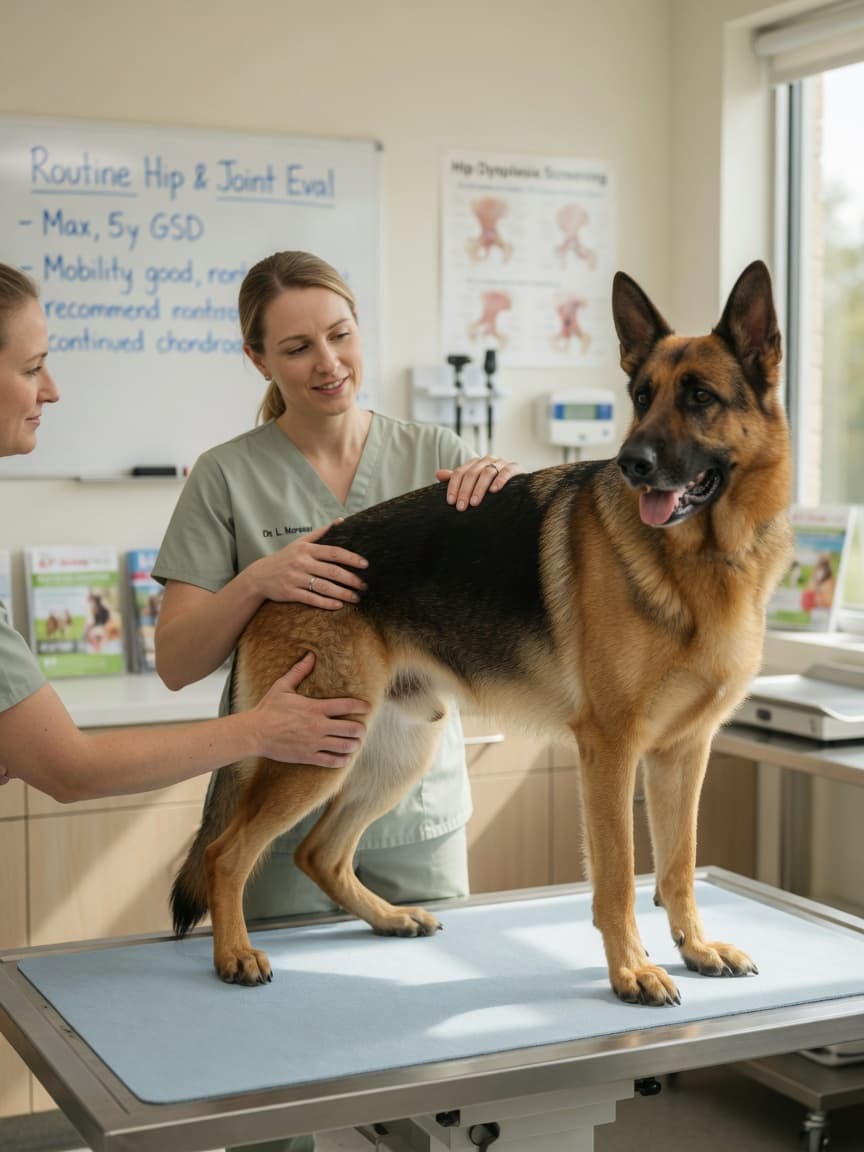
Deutsche Schäferhunde gehören zu den Rassen, die am stärksten mit Hüft- und Ellbogendysplasie assoziiert werden, aufgrund ihrer schnellen Wachstumsrate, ihres großen Körperbaus und einer genetischen Veranlagung für abnormale Gelenkentwicklung, die durch Jahrzehnte selektiver Zucht für eine bestimmte Körperform verstärkt wurde. Das Wichtigste zu verstehen ist, dass Dysplasie eine Entwicklungsstörung ist, nicht nur ein Problem im Alter — frühe Ernährung, Wachstumsrate und Bewegungsmanagement in der Welpenzeit haben einen realen, bleibenden Einfluss darauf, wie sich diese Gelenke bilden und wie komfortabel Ihr Hund später im Leben sein wird.
Warum Deutsche Schäferhunde anfällig für Dysplasie sind
Hüft- und Ellbogendysplasie beziehen sich auf abnormale Bildung der Hüft- und Ellbogengelenke während des Wachstums, was zu Lockerheit, Inkongruenz und schließlich zu degenerativer Gelenkerkrankung (Osteoarthritis) führt. Deutsche Schäferhunde sind aus mehreren miteinander verbundenen Gründen anfällig:
- Genetik: Sowohl Hüft- als auch Ellbogendysplasie haben eine starke vererbbare Komponente. Der Deutsche Schäferhund ist in der veterinärmedizinischen orthopädischen Fachliteratur und in Hüft-/Ellbogenbewertungsschemata, die von Rasseclubs verwendet werden, durchgehend unter den am meisten betroffenen Rassen aufgeführt.
- Schnelles Wachstum und große Größe: Welpen dieser Rasse wachsen schnell und erreichen ein beträchtliches Erwachsenengewicht, was erhebliche mechanische Belastungen auf sich entwickelnde Gelenke ausübt, bevor die umgebende Muskulatur und das Bindegewebe vollständig ausgereift sind.
- Körperbau: Die abfallende Rückenlinie der Rasse und die gewinkelten Hintergliedmaßen, die Teil des Rassestandards in einigen Ausstellungslinien sind, können die biomechanische Belastung auf die Hüften und Sprunggelenke verändern und möglicherweise über die Zeit zu Gelenkbelastung beitragen.
- Ellbogen-spezifische Anatomie: Das Ellbogengelenk ist ein komplexes Gelenk, das aus drei Knochen besteht, die mit ausgeglichenen Raten wachsen müssen. Jedes Missverhältnis während der Entwicklung kann zu Erkrankungen führen, die unter Ellbogendysplasie zusammengefasst werden, einschließlich fragmentierter Processus coronoideus, nicht vereinigtem Processus anconaeus und Osteochondritis dissecans.
Diese Faktoren bedeuten, dass sogar Welpen von gesundheitlich getesteten Eltern gelegentlich Dysplasie entwickeln können, obwohl sorgfältige Zucht das Risiko erheblich verringert. Für einen umfassenderen Überblick über die Merkmale und das typische Gesundheitsprofil der Rasse, siehe den Deutscher-Schäferhund-Rassenleitfaden.
Frühe Anzeichen und Symptome zum Beobachten
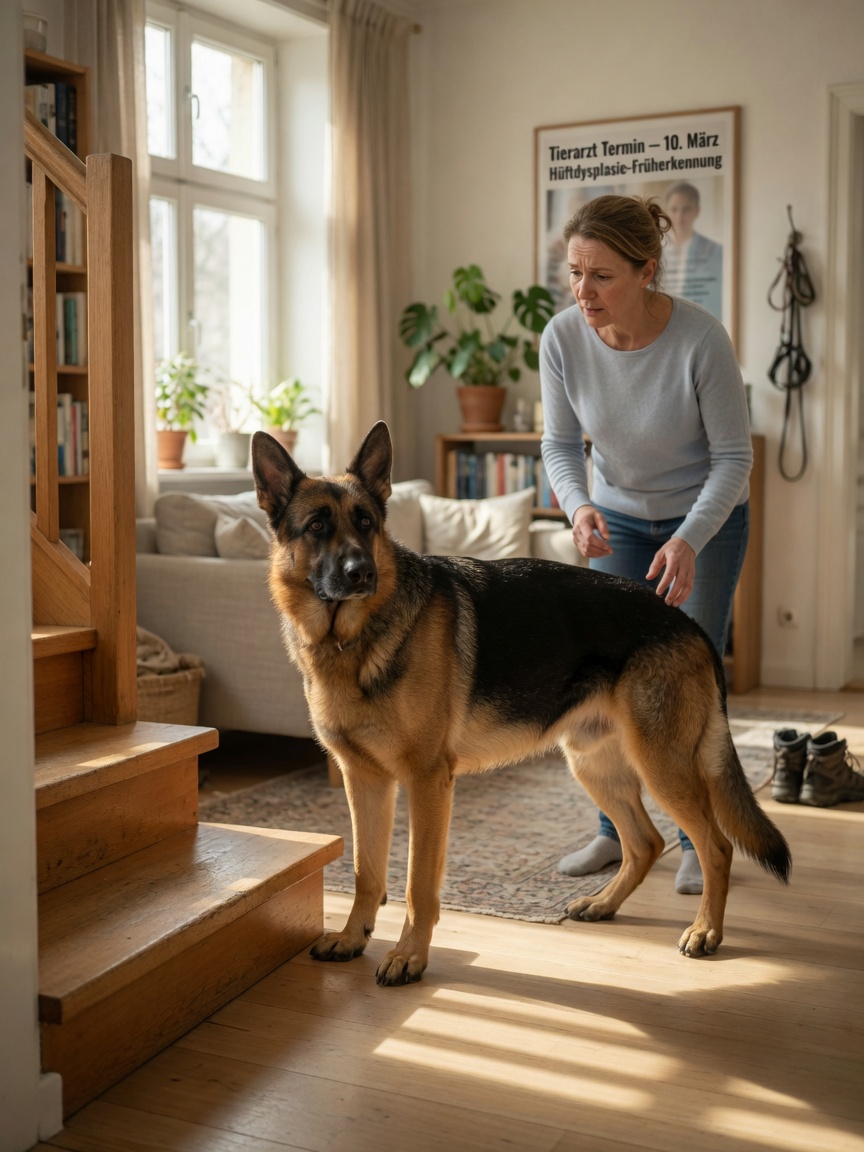
Dysplasie kann überraschend früh in Erscheinung treten, manchmal schon ab vier Monaten, oder wird möglicherweise erst im mittleren Alter offensichtlich, wenn sich Arthritis entwickelt hat. Anzeichen zum Beobachten sind:
- Ein „Hoppelgang" beim Laufen, bei dem beide Hinterläufe zusammen bewegt werden
- Widerwille, ins Auto zu springen, Treppen zu steigen oder nach dem Ausruhen aufzustehen
- Steifheit, die morgens oder nach Bewegung schlimmer ist und dann nach dem Aufwärmen besser wird
- Reduzierte Ausdauer beim Training oder Zurückbleiben bei Spaziergängen
- Eine wankende, wackelige Bewegung der Hintergliedmaßen (häufig bei Hüftdysplasie)
- Vorderbeinhinken, Ellbogenschwellungen oder nach außen gedrehte Pfote beim Stehen (deutet eher auf Ellbogendysplasie hin)
- Muskelabbau über den Oberschenkeln oder Schultern, manchmal bemerkt, bevor ein offensichtliches Hinken auftritt
- Allgemeine Reizbarkeit, Widerwille, an den Beinen oder der Hüfte berührt zu werden, oder reduzierte Spielbegeisterung
Da Deutsche Schäferhunde oft stoisch sind und begeistert zu gefallen versuchen, können leichte Beschwerden lange Zeit unbemerkt bleiben. Subtile Veränderungen in der Bereitschaft zum Training sind oft der erste Hinweis statt offensichtlicher Schmerz.
Wenn es ein Notfall ist
Dysplasie selbst ist normalerweise ein chronisches, allmählich fortschreitendes Leiden statt eines plötzlichen Notfalls. Sie sollten jedoch sofort einen Tierarzt aufsuchen, wenn Sie Folgendes bemerken:
- Plötzliches, starkes Hinken mit Ihrem Hund, der kein Gewicht auf ein Bein tragen kann
- Offensichtliche Schwellungen, Hitze oder Schmerz um ein Gelenk, das plötzlich auftritt
- Ein Hund, der zusammenbricht oder überhaupt nicht aufstehen kann
- Anzeichen erheblicher Schmerzen wie ständiges Hecheln, Zittern oder Vokalisierung
Diese Anzeichen könnten auf eine sekundäre Verletzung hindeuten, wie z. B. einen Bänderriss oder Gelenkerguss, statt auf unkomplizierte Dysplasie, und rechtfertigen eine umgehende Bewertung.
Diagnose
Wenn Dysplasie vermutet wird, wird Ihr Tierarzt typischerweise mit einer gründlichen körperlichen und orthopädischen Untersuchung beginnen, wobei Gang, Gelenkbewegungsbereich und Schmerzreaktion beurteilt werden. Spezifische Diagnostikinstrumente sind:
- Radiographien (Röntgenaufnahmen): Das Hauptdiagnoseverfahren, normalerweise unter Sedierung oder Vollnarkose durchgeführt, um eine genaue Positionierung zu ermöglichen. Hüften-Röntgenaufnahmen bewerten die Gelenklockerheit und die Form des Oberschenkelkopfes und der Gelenkpfanne; Ellbogen-Röntgenaufnahmen suchen nach Gelenkinkongru enz und sekundären arthralen Veränderungen.
- Palpationstests: Manipulationen wie der Ortolani-Test können dabei helfen, Hüftlockerheit bei jüngeren Hunden zu erkennen.
- Fortgeschrittene Bildgebung: CT-Scans werden zunehmend für Ellbogendysplasie verwendet, da sie subtile knöcherne Veränderungen erkennen können, die bei einfachen Röntgenaufnahmen möglicherweise übersehen werden.
- Offizielle Bewertungsschemata: Viele Länder haben formelle Hüft- und Ellbogenbewertungsprogramme, die den Schweregrad der Dysplasie bewerten und von verantwortungsvollen Züchtern verwendet werden, um Zuchtentscheidungen zu treffen.
Management- und Behandlungsoptionen
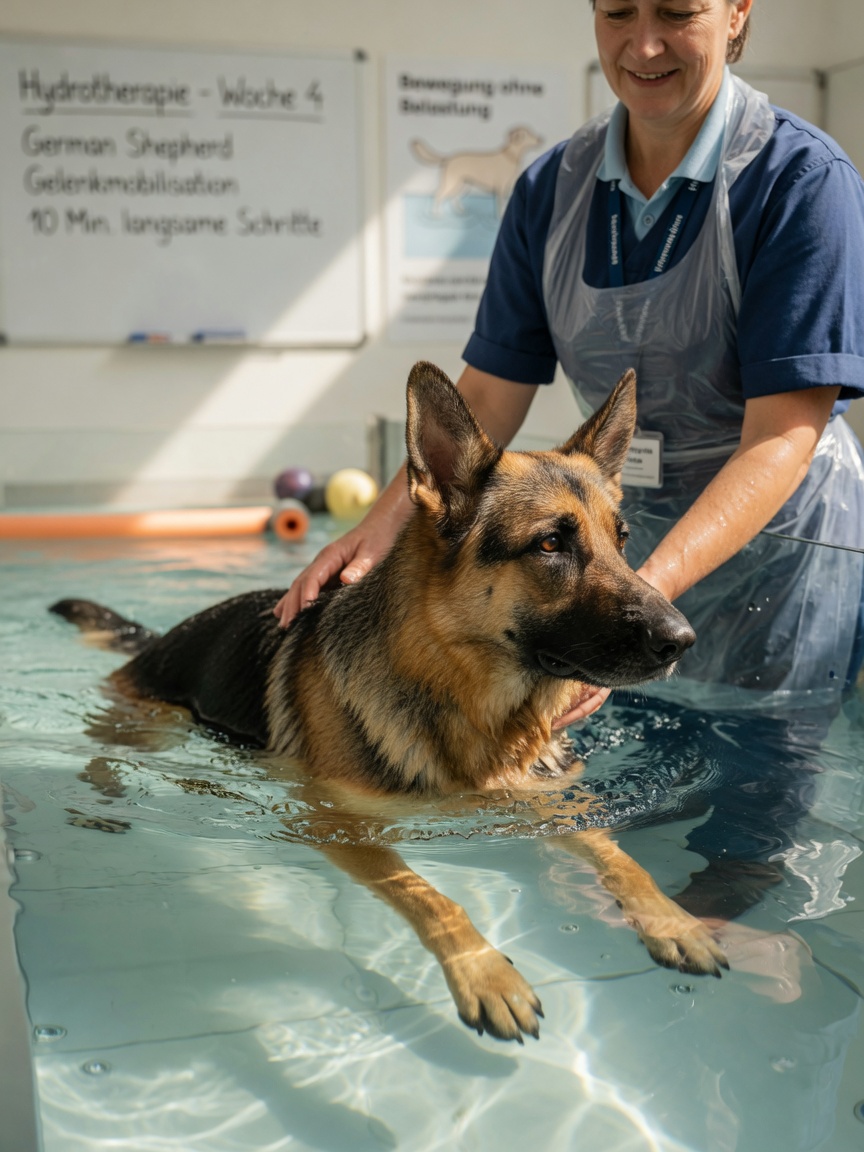
Die Behandlung wird auf das Alter des Hundes, den Schweregrad der Erkrankung und den Lebensstil abgestimmt und kombiniert oft mehrere Ansätze:
- Gewichtskontrolle: Die Aufrechterhaltung eines schlanken Gewichts Ihres Hundes ist eine der wirksamsten Möglichkeiten, um Gelenkbelastung zu reduzieren und das Fortschreiten von Arthritis zu verlangsamen. Selbst bescheidenes Übergewicht erhöht die Belastung betroffener Gelenke erheblich.
- Kontrollierte Bewegung: Regelmäßige, gelenkschonende Aktivitäten wie Spaziergänge an der Leine und Schwimmen helfen, die Muskulatur um das Gelenk zu erhalten, ohne die ruckartigen Auswirkungen von Rennen, Sprüngen oder wiederholtem Ballwerfen.
- Gelenkergänzungen: Produkte, die Glukosamin, Chondroitin oder Omega-3-Fettsäuren enthalten, werden häufig verwendet, obwohl Besitzer realistische Erwartungen mit ihrem Tierarzt besprechen sollten, da die Evidenz für Wirkung zwischen verschiedenen