
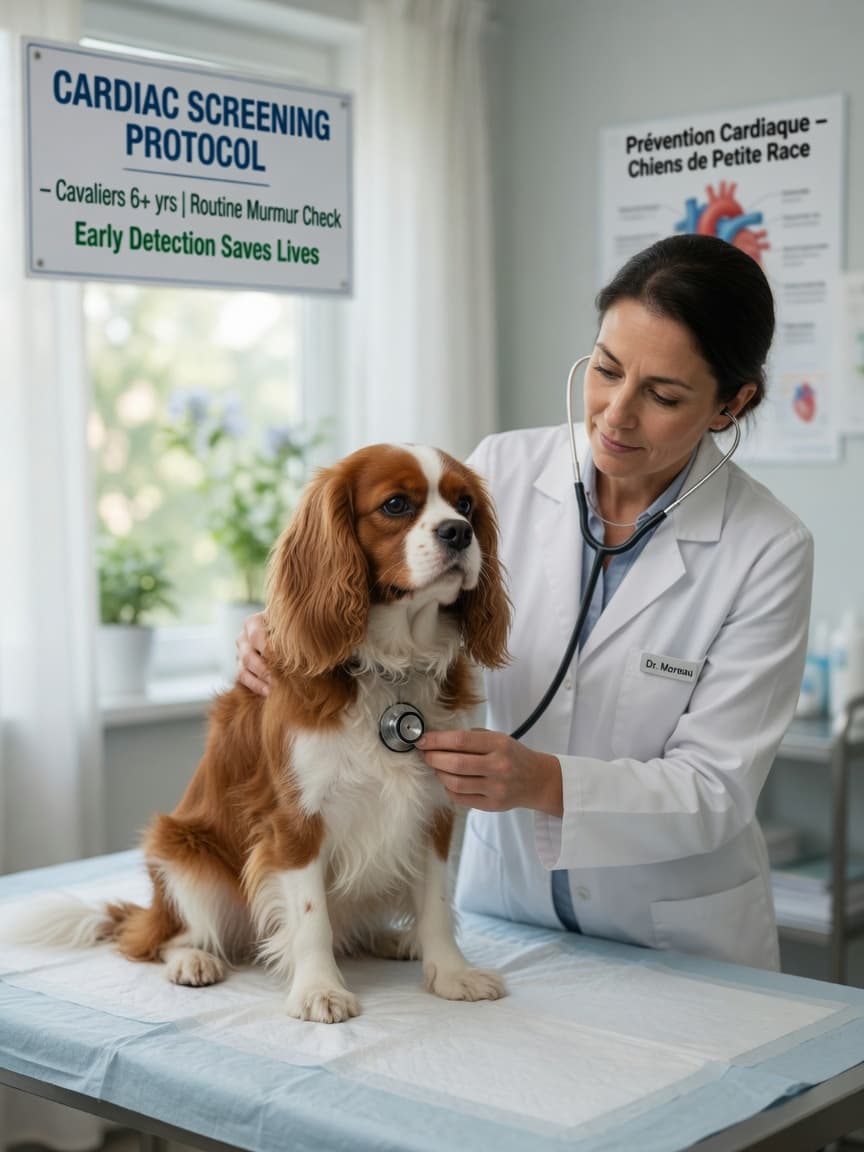
Cavalier King Charles Spaniels haben eine der höchsten bekannten Veranlagungen für die myxomatöse Mitralklappenerkrankung (MMVD) aller Hunderassen, vor allem aufgrund einer erblichen strukturellen Schwäche des Mitralklappengewebes selbst. Das Wichtigste, das man verstehen muss, ist, dass regelmäßige tierärztliche Herzuntersuchungen, idealerweise einschließlich Auskultation von jungem Alter an, es ermöglichen, diese fortschreitende Erkrankung frühzeitig zu erkennen, wenn die Behandlungsmöglichkeiten am wirksamsten sind und die Lebensqualität so lange wie möglich erhalten werden kann.
Warum Cavaliers besonders anfällig für Mitralklappenerkrankungen sind
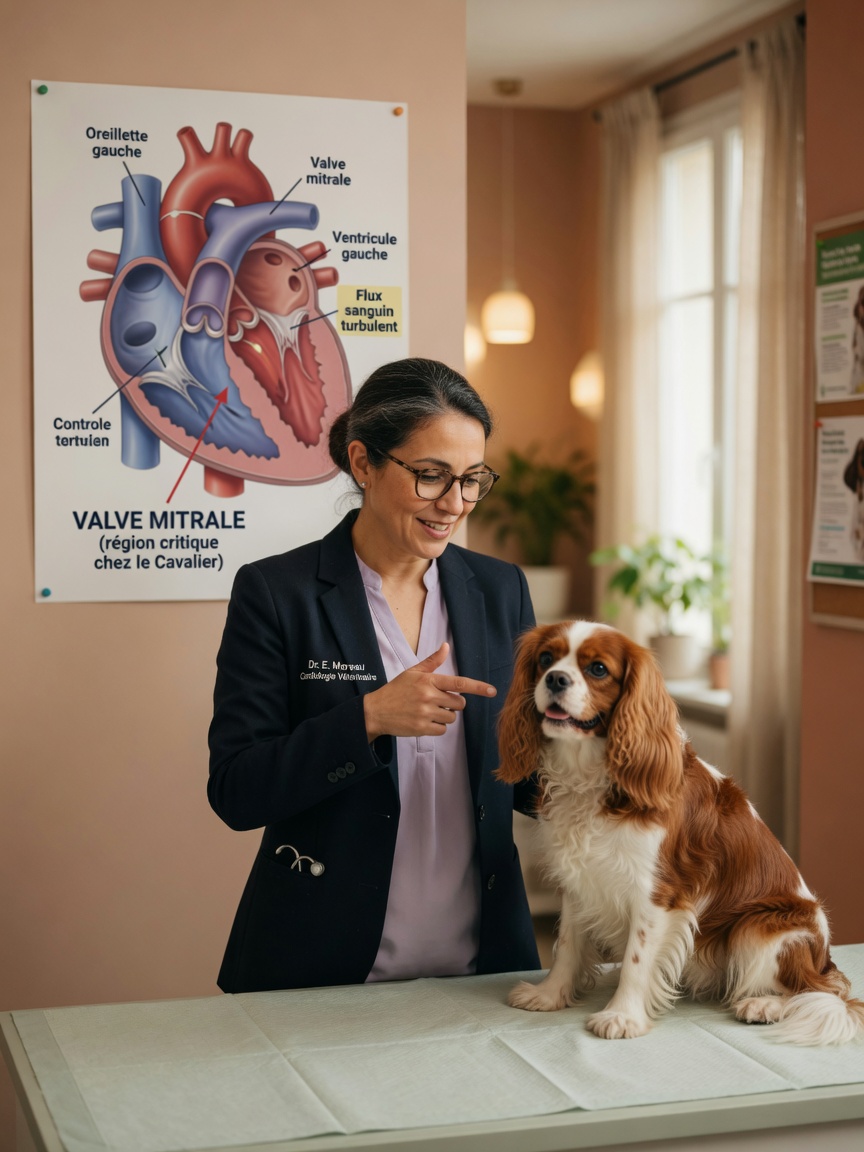
Die myxomatöse Mitralklappenerkrankung ist eine degenerative Erkrankung, bei der die Mitralklappe, die zwischen dem linken Vorhof und der linken Herzkammer des Herzens sitzt, allmählich verdickt, schwächer wird und ihre normale Form verliert. Im Laufe der Zeit können die Klappensegel nicht mehr richtig schließen, sodass Blut rückwärts (regurgitiert) in den linken Vorhof sickert, anstatt effizient vorwärts durch den Körper zu fließen. Diese Ineffizienz zwingt das Herz, härter zu arbeiten, und führt schließlich dazu, dass es sich vergrößert.
Obwohl MMVD bei jeder Rasse auftreten kann, tritt sie bei Cavalier King Charles Spaniels in einem viel jüngeren Alter und mit viel größerer Häufigkeit auf als in der allgemeinen Hundepopulation. Die Forschung zur Rasse deutet stark auf eine erbliche Komponente hin, wobei das Bindegewebe, das die Klappensegel bildet, strukturell schwächer ist als bei anderen Rassen. Es wird angenommen, dass es sich um ein polygenes Merkmal handelt, das heißt, dass wahrscheinlich mehrere Gene beteiligt sind, was das Herauszüchten aus der Population trotz jahrzehntelanger Screening-Bemühungen verantwortungsvoller Züchter und Veterinärkardiologen zu einer Herausforderung gemacht hat.
Es ist erwähnenswert, dass diese Veranlagung ein prägendes Gesundheitsanliegen der Rasse ist, und jeder, der das Temperament und die Pflegebedürfnisse des Cavalier recherchiert, sollte den Rasseleitfaden zum Cavalier King Charles Spaniel zusammen mit diesem Artikel lesen, um das vollständige Bild dessen zu verstehen, was die Haltung dieser anhänglichen Rasse mit sich bringt.
Frühe Anzeichen und Symptome, auf die man achten sollte

MMVD schreitet typischerweise über Jahre langsam voran, und viele Hunde zeigen in den frühen Stadien überhaupt keine äußerlichen Symptome, selbst wenn ein Tierarzt bereits ein Herzgeräusch hören kann. Deshalb sind Routineuntersuchungen so wichtig. Mit Fortschreiten der Erkrankung können Besitzer jedoch Folgendes bemerken:
- Einen leisen Husten, insbesondere nachts, nach Belastung oder bei Aufregung
- Verminderte Ausdauer oder Unlust, Spaziergänge zu unternehmen, die sie zuvor genossen haben
- Schnellere oder angestrengtere Atmung, selbst in Ruhe
- Episoden schnellen Ermüdens beim Spielen
- Gelegentliche Ohnmacht oder Kollaps (Synkope), insbesondere bei Aufregung oder Hustenanfällen
- Ein topfbauchiges Erscheinungsbild in späteren Stadien, das auf eine Flüssigkeitsansammlung im Bauchraum hinweisen kann
Ein Herzgeräusch, das Ihr Tierarzt bei einer Routineuntersuchung feststellt, ist sehr oft lange Zeit das erste und einzige Anzeichen. Das Geräusch wird auf einer Skala (typischerweise 1 bis 6) anhand seiner Lautstärke eingestuft, und diese Einstufung hilft Ihrem Tierarzt zusammen mit der Bildgebung zu beurteilen, wie weit die Erkrankung fortgeschritten ist.
Wenn die Mitralklappenerkrankung zum Notfall wird
Die meisten Cavaliers leben über einen beträchtlichen Zeitraum mit einem leichten Geräusch und ohne Symptome, aber Besitzer sollten die Warnzeichen kennen, die eine sofortige tierärztliche Behandlung erforderlich machen. Eine kongestive Herzinsuffizienz entwickelt sich, wenn das Herz die undichte Klappe nicht mehr kompensieren kann und sich Flüssigkeit in oder um die Lunge anzusammeln beginnt (Lungenödem). Suchen Sie Notfallversorgung auf, wenn Ihr Hund Folgendes zeigt:
- Plötzliche, schwere oder anhaltende Atemnot
- Atmung, die selbst dann angestrengt wirkt, wenn Ihr Hund still sitzt
- Blaues oder graugetöntes Zahnfleisch
- Kollaps, der sich nicht schnell löst
- Einen dramatischen Anstieg der Ruheatemfrequenz (viele Kardiologen empfehlen Besitzern, die Atemzüge pro Minute zu Hause zu zählen, wenn ihr Hund ruhig ist, und alles, was durchgehend über dem normalen Ruhebereich liegt, ihrem Tierarzt zu melden)
- Schwere Lethargie oder Reaktionslosigkeit
Diese Anzeichen können auf eine akute kongestive Herzinsuffizienz hinweisen, die lebensbedrohlich ist und eine dringende Behandlung erfordert, oft einschließlich Sauerstoffunterstützung und injizierbarer Diuretika.
Wie die Mitralklappenerkrankung diagnostiziert wird
Die Diagnose beginnt in der Regel mit einer gründlichen körperlichen Untersuchung, bei der Ihr Tierarzt das Herz mit einem Stethoskop sorgfältig abhört, um ein etwaiges Geräusch festzustellen und einzustufen. Von dort aus können weitere Untersuchungen Folgendes umfassen:
- Echokardiographie (Herzultraschall): gilt als Goldstandard, ermöglicht die direkte Visualisierung der Klappe, die Messung der Herzhöhlengröße und die Beurteilung des Blutflusses und der Schwere der Regurgitation
- Röntgenaufnahmen des Brustkorbs: werden verwendet, um die Herzgröße zu beurteilen und auf Flüssigkeit in der Lunge zu prüfen, was hilft festzustellen, ob sich eine kongestive Herzinsuffizienz entwickelt hat
- Blutuntersuchungen, einschließlich NT-proBNP: ein Biomarker, der ansteigen kann, wenn das Herz unter Belastung steht, nützlich ergänzend zur Bildgebung
- EKG (Elektrokardiogramm): gelegentlich verwendet, um unregelmäßige Herzrhythmen zu überprüfen, die mit einer fortgeschrittenen Erkrankung einhergehen können
Viele Veterinärkardiologen verwenden ein Stadienklassifikationssystem (häufig mit Buchstaben wie B1, B2, C und D bezeichnet), um zu beschreiben, wie weit die Erkrankung fortgeschritten ist, basierend auf dem Vorhandensein eines Geräuschs, der Herzvergrößerung in der Bildgebung und darauf, ob klinische Anzeichen einer Herzinsuffizienz vorliegen. Diese Stadieneinteilung leitet die Behandlungsentscheidungen.
Management- und Behandlungsoptionen
Es gibt derzeit keine Heilung für MMVD und in der allgemeinen tierärztlichen Praxis keine Möglichkeit, die Klappe selbst zu reparieren, obwohl eine Klappenreparaturoperation an einer kleinen Anzahl hochspezialisierter Überweisungszentren für geeignete Kandidaten existiert. Für die überwiegende Mehrheit der Hunde konzentriert sich die Behandlung darauf, das Fortschreiten zu verlangsamen, Symptome zu kontrollieren und die Lebensqualität so lange wie möglich zu erhalten. Optionen, die Ihr Tierarzt besprechen kann, umfassen:
- Pimobendan: ein Medikament, das dem Herzen hilft, sich effizienter zusammenzuziehen, und das häufig eingeführt wird, sobald eine signifikante Herzvergrößerung festgestellt wird, noch bevor Symptome auftreten
- ACE-Hemmer: werden verwendet, um den Blutdruck zu kontrollieren und die Belastung des Herzens zu reduzieren, insbesondere sobald sich eine Herzinsuffizienz entwickelt
- Diuretika (wie furosemide oder torasemide): werden verwendet, um Flüssigkeitsansammlungen in der Lunge zu reduzieren, sobald eine kongestive Herzinsuffizienz vorliegt
- Spironolactone: manchmal als zusätzliches unterstützendes Medikament hinzugefügt
- Ernährungsmanagement: Ihr Tierarzt kann eine Diät mit kontrolliertem Natriumgehalt empfehlen, insbesondere bei fortgeschrittenerer Erkrankung
- Regelmäßige Überwachung: wiederholte Echokardiogramme, Röntgenaufnahmen und Blutuntersuchungen in von Ihrem Kardiologen festgelegten Intervallen, um das Fortschreiten zu verfolgen und die Medikation anzupassen
Behandlungspläne sind höchst individuell und hängen vom Stadium der Erkrankung ab, daher ist es unerlässlich, den spezifischen Empfehlungen Ihres Tierarztes zu folgen und nicht allgemeinen Online-Leitlinien.
Prävention und tägliche Pflege
Da MMVD bei Cavaliers weitgehend genetisch bedingt ist, kann sie nicht allein durch den Lebensstil vollständig verhindert werden, aber es gibt vieles, was Besitzer tun können, um die Herzgesundheit zu unterstützen und Probleme frühzeitig zu erkennen:
- Wählen Sie einen Welpen von einem Züchter, der die Herzen der Zuchthunde gesundheitlich testet, idealerweise mit Eltern, die von einem in der kardialen Auskultation erfahrenen Tierarzt oder, noch besser, einem Veterinärkardiologen beurteilt wurden
- Vereinbaren Sie jährliche Herzuntersuchungen bei Ihrem Tierarzt und erhöhen Sie die Häufigkeit, wenn Ihr Hund älter wird oder ein Geräusch festgestellt wird
- Halten Sie Ihren Hund auf einem gesunden Gewicht, da Übergewicht das Herz zusätzlich belastet
- Sorgen Sie für regelmäßige, moderate Bewegung, die zum aktuellen kardialen Stadium Ihres Hundes passt, und passen Sie das Aktivitätsniveau in Absprache mit Ihrem Tierarzt an, wenn die Erkrankung fortschreitet
- Lernen Sie, die Ruheatemfrequenz Ihres Hundes zu Hause zu zählen, da ein allmählich ansteigender Trend ein frühes Warnzeichen sein kann, das es wert ist, gemeldet zu werden
- Halten Sie die Zahngesundheit in gutem Zustand, da einige Tierärzte glauben, dass orale Bakterien zu systemischen Entzündungen beitragen können, obwohl dieser Zusammenhang weniger gut etabliert ist als die primäre genetische Ursache
Kosten und Prognose: Ein realistisches Bild
Das Leben mit einem Cavalier, der eine Mitralklappenerkrankung hat, kann erhebliche laufende Kosten mit sich bringen, einschließlich regelmäßiger kardiologischer Konsultationen, Echokardiogramme, Blutuntersuchungen und lebenslanger Medikation, die oft an Komplexität zunimmt, wenn die Erkrankung fortschreitet. Eine vor Feststellung eines Geräuschs abgeschlossene Tierkrankenversicherung kann einen erheblichen Unterschied bei der Erschwinglichkeit machen, da MMVD nach der Diagnose wahrscheinlich als Vorerkrankung behandelt wird.
Die Prognose variiert enorm je nach Stadium bei der Diagnose und danach, wie der individuelle Hund auf die Behandlung anspricht. Viele Cavaliers leben jahrelang mit einem leichten Geräusch und ohne klinische Anzeichen, während Hunde, bei denen eine kongestive Herzinsuffizienz diagnostiziert wurde, eine vorsichtigere Aussicht haben, obwohl moderne Medikamente die komfortable Zeit mit guter Lebensqualität für viele Patienten bedeutsam verlängert haben. Ihr Tierarzt oder Kardiologe ist am besten in der Lage, eine individualisierte Prognose basierend auf dem spezifischen Stadium Ihres Hundes und dem Ansprechen auf die Behandlung zu geben.
Häufig gestellte Fragen
Ab welchem Alter sollte ich das Herz meines Cavalier untersuchen lassen?
Die meisten Veterinärkardiologen empfehlen jährliche Herzuntersuchungen ab etwa einem Jahr, da Geräusche gelegentlich bei jungen Hunden auftreten können. Angesichts der Häufigkeit dieser Erkrankung in der Rasse entscheiden sich einige Besitzer, das Screening sogar noch früher zu beginnen und die Untersuchungen das ganze Leben ihres Hundes fortzusetzen und die Häufigkeit zu erhöhen, sobald ein Geräusch zum ersten Mal gehört wird.
Kann mein Cavalier noch normal bewegt werden, wenn er ein Herzgeräusch hat?
Viele Hunde mit einem Geräusch im Frühstadium und ohne Vergrößerung können mit normaler, moderater Bewegung fortfahren, aber dies sollte immer von der Beurteilung Ihres Tierarztes zum aktuellen Erkrankungsstadium geleitet werden. Mit Fortschreiten der Erkrankung kann Ihr Tierarzt kürzere, sanftere Spaziergänge und das Vermeiden von anstrengender Aufregung oder Anstrengung empfehlen.
Ist es meine Schuld, wenn mein Cavalier diese Erkrankung entwickelt?
Nein. Dies ist eine erbliche Veranlagung, die in der Genetik der Rasse verwurzelt ist, nicht etwas, das durch irgendetwas verursacht wurde, das ein Besitzer getan hat. Das Hilfreichste, was Sie tun können, ist, regelmäßige tierärztliche Untersuchungen im Blick zu behalten, damit etwaige Veränderungen so früh wie möglich erkannt und behandelt werden.
Dieser Artikel dient nur allgemeinen Informationszwecken und ist kein Ersatz für professionelle veterinärmedizinische Beratung. Konsultieren Sie stets Ihren Tierarzt für eine genaue Diagnose und einen angemessenen, auf Ihren Hund zugeschnittenen Behandlungsplan.