
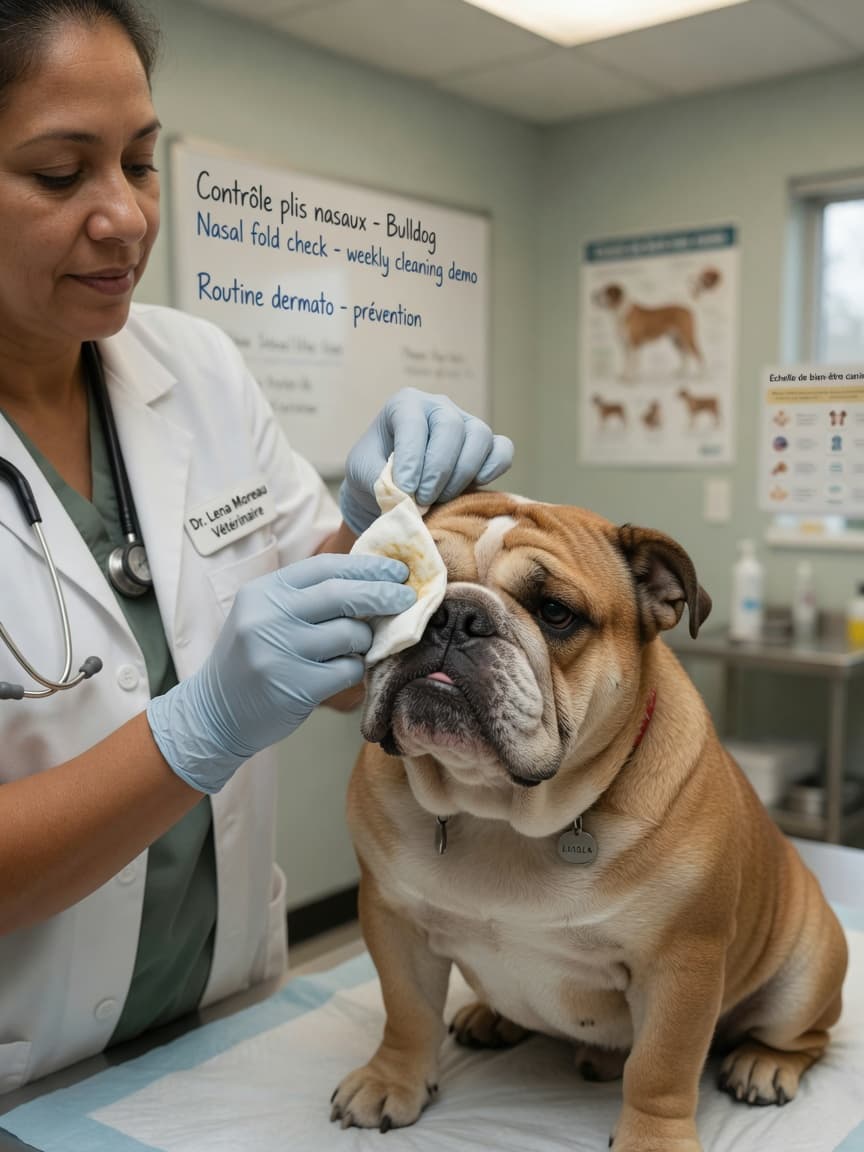
Bulldogs are among the breeds most prone to skin fold dermatitis because their characteristically wrinkled face, tight tail pocket, and thick facial rope create warm, moist, low-oxygen pockets where bacteria and yeast thrive. The single most important thing to know is that this is a chronic, manageable condition rather than a one-off infection — daily fold cleaning is the foundation of keeping your Bulldog comfortable, and skipping it is the most common reason flare-ups keep coming back.
Why Bulldogs Are Prone to Skin Fold Dermatitis
Skin fold dermatitis (sometimes called intertrigo) develops when two skin surfaces sit in constant contact, trapping moisture, sweat, saliva, tears, and debris. Bulldogs are built with exactly this anatomy in mind: a heavily wrinkled muzzle, a deep nasal fold above the nose, facial skin that can overhang the eyes, and — in many dogs — a corkscrew or tightly curled tail that presses into a fold at the base of the tail (often called a tail pocket).
Because Bulldogs cannot pant efficiently due to their brachycephalic airway, and because they drool, tear, and drip saliva more than many other breeds, the folds stay damp for long periods. This warm, airless, moist environment is an ideal breeding ground for bacteria (commonly staphylococcus) and yeast (Malassezia). Add in food debris caught in the nasal fold after eating, and the friction from constant movement, and you have a recipe for recurring irritation and infection. This predisposition is structural and genetic — it comes from the very features that define the breed's appearance, which is why it's discussed as a standard part of the Bulldog breed guide.
The Most Commonly Affected Areas
- Nasal fold — the deep crease directly above the nose, one of the most frequently affected sites in the breed.
- Facial folds and lip folds — around the muzzle and jowls, especially in dogs with heavier wrinkling.
- Tail pocket — the skin fold beneath a tightly curled or screwed tail.
- Vulvar folds — in female dogs with a recessed vulva, folds can trap moisture and urine.
- Neck and shoulder wrinkles — less commonly, but possible in heavily built dogs.
Early Signs and Symptoms to Watch For
Because folds are hidden from casual view, mild dermatitis is easy to miss until it becomes uncomfortable for your dog. Checking folds regularly, even when your Bulldog seems fine, is genuinely the best early-warning system you have.
- Redness or a moist, shiny appearance within the fold
- A distinct sour or yeasty smell coming from the face or tail area
- Brown or yellowish discharge, or crusty debris trapped in the skin fold
- Hair loss or thinning around the affected fold
- Your dog rubbing their face along furniture or carpet, or pawing at the muzzle
- Sensitivity or flinching when you touch or clean the area
- Visible thickening or darkening of the skin in long-standing cases
Mild cases often look like simple irritation, but left unaddressed the skin can become raw, ulcerated, and increasingly painful.
When It's an Emergency (or Needs Prompt Vet Attention)
Skin fold dermatitis is rarely life-threatening, but it can progress quickly in Bulldogs and cause genuine pain, so don't assume it will simply resolve on its own. Seek veterinary attention promptly if you notice:
- Open sores, bleeding, or raw ulcerated skin within a fold
- A strong, worsening odour despite cleaning
- Swelling, heat, or obvious pain when the area is touched
- Discharge that is thick, green, or foul-smelling (suggesting a deeper bacterial infection)
- Your dog becoming withdrawn, reluctant to eat, or unusually irritable — signs of significant discomfort
- Fold infections near the eyes causing squinting, discharge, or corneal irritation
Chronic, untreated fold infections can spread deeper into the skin and become considerably harder — and more expensive — to resolve than an early, straightforward case.
Diagnosis
Diagnosis is usually made through a physical examination, as the pattern (redness confined to fold contact areas, odour, moisture) is fairly recognisable in Bulldogs. Your vet may also:
- Take a skin scraping or tape impression to check for yeast or bacteria under the microscope
- Perform a bacterial culture if the infection is severe, recurrent, or not responding to standard treatment
- Assess whether an underlying allergy (environmental or food-related) is contributing, since allergic skin disease is common in the breed and can worsen fold dermatitis
- Check for anatomical factors making things worse, such as an unusually deep nasal fold or a tightly recessed vulva
Management and Treatment Options
Treatment depends on severity, but the goal is always the same: dry out the fold, clear the infection, and reduce friction and moisture going forward.
- Cleaning: Gentle daily cleansing with a vet-recommended antiseptic or medicated wipe, followed by thorough drying, is the cornerstone of both treatment and prevention.
- Topical medication: Medicated creams, gels, or wipes containing antifungal or antibacterial agents are commonly prescribed for active infections.
- Oral medication: In more severe or deep-seated infections, your vet may prescribe oral antibiotics or antifungals.
- Drying agents: Vet-approved drying powders or astringent solutions can help keep folds less hospitable to bacteria and yeast between cleanings.
- Surgical correction: For dogs with chronic, recurrent, or severe fold dermatitis unresponsive to medical management, surgical fold removal (such as nasal fold resection, tail pocket removal, or vulvoplasty) is a recognised option that can permanently resolve the problem in the affected area.
- Managing underlying allergies: If allergic skin disease is driving repeated flare-ups, addressing that separately (through diet trials, allergy testing, or medication) can significantly reduce fold problems.
Prevention and Daily Care
Prevention is far more achievable — and far cheaper — than repeated treatment cycles, and it should form part of every Bulldog owner's routine care.
- Clean facial and tail folds daily (or every other day at minimum) with a soft cloth and a vet-recommended, alcohol-free cleanser
- Always dry folds completely afterwards — moisture left behind undoes the benefit of cleaning
- Check folds after meals, as food debris commonly collects in the nasal fold
- Keep fur around folds trimmed short if your vet or groomer advises it, to reduce moisture trapping
- Monitor for early redness or odour rather than waiting for obvious symptoms
- Maintain a healthy body weight, as excess weight deepens skin folds and worsens the problem
- Discuss with your vet whether your dog's fold anatomy is significant enough that preventive surgical correction might reduce lifelong issues
Cost and Prognosis: A Realistic Picture
Mild, early-caught fold dermatitis is inexpensive to manage — often just the cost of a vet visit and topical treatment. However, because Bulldogs' anatomy predisposes them to recurrence, many dogs need ongoing, lifelong fold care rather than a single cure. Chronic or severe cases, particularly those requiring repeated vet visits, cultures, or eventual surgical fold removal, involve a higher cumulative cost over the dog's life. The prognosis with consistent care is good — most Bulldogs live comfortably with a manageable daily or weekly cleaning routine, and surgical correction, when needed, is generally successful in resolving problem folds permanently.
Is skin fold dermatitis painful for my Bulldog?
Yes, it can be, particularly once the skin becomes raw or ulcerated. Even mild cases cause itching and discomfort, which is why prompt attention to early redness or odour matters.
Can I just remove my Bulldog's tail pocket or nasal fold myself?
No — surgical fold correction should only ever be performed by a veterinarian under appropriate anaesthesia. However, daily non-surgical cleaning and drying at home is both safe and essential.
Will my Bulldog need surgery eventually?
Not necessarily. Many Bulldogs are managed successfully for life with consistent daily fold care. Surgery is generally reserved for dogs with recurrent, severe, or medically unresponsive fold infections.
This article is for general informational purposes only and does not replace professional veterinary advice. Always consult your vet for an accurate diagnosis and an individual treatment plan for your dog.